Zorro in Literature: The History of a Legend
By Dr. Carol Anderson
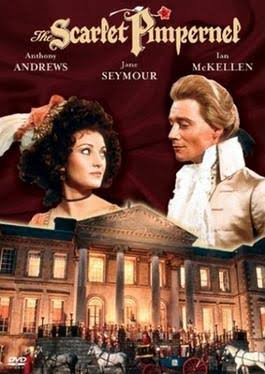
The idea of vigilante justice existed long before Zorro was “born.” Robin Hood, the outlaw archer, and his creed of “rob the rich to give to the poor” have roots in medieval ballads of the fourteenth century. The idea of an ineffectual dandy by day/champion of the downtrodden by night features in Baroness Emma Orkzy’s 1903 novel The Scarlet Pimpernel, set amidst the chaos of the Reign of Terror in revolutionary France. Sir Percy’s calling card in that story was a scarlet flower, but he, like Don Diego, was an expert swordsman.
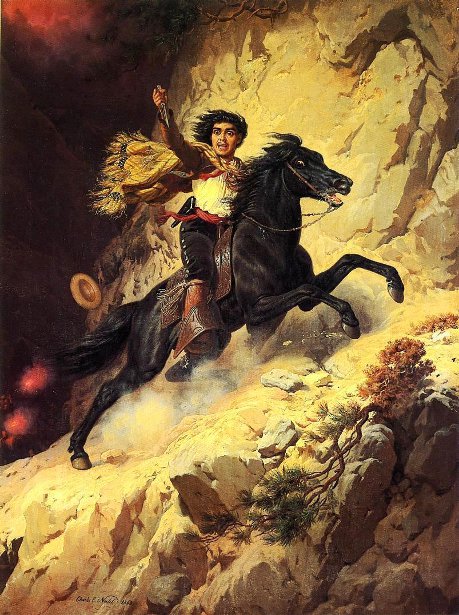
In Alta California, several historical figures appear to have inspired the story of Zorro. The most significant of these is Joaquín Murrieta, sometimes spelled Murieta, known as the Robin Hood of the West (c.1829-1853). Though historical sources dispute the actuality of his life experiences, and even of his existence, certain facts are consistent. He was born in Mexico and traveled as a “forty-niner” to seek his fortune in the gold fields of California. Historian Susan Lee Johnson, well-versed in the history of American West, wrote “there seems to be a consensus that Anglos drove him from a rich mining claim, and that, in rapid succession, his wife was [assaulted], his half-brother lynched and Murrieta himself horse-whipped.” Murrieta became an outlaw and the de facto leader of a gang called the “Five Joaquins,” who murdered and thieved their way through the Sierra Nevadas from 1850-1853. In May of 1853, the California State Rangers were created for the sole purpose of bringing the “Five Joaquins” gang to justice. In July, the Rangers and the gang faced off, and allegedly Murrieta and his sidekick “Three Fingered Jack” were killed. The remainder of the gang dispersed, some continuing their outlaw existence and others becoming reformed contributors to society.
The character of Zorro was created in 1919 by Johnston McCulley, a writer of pulp magazines or novels. “Pulp” referred to the cheap pulp paper on which the stories were printed, making them affordable to the everyday working person. Pulp magazines were popular from 1896 to the 1950s and are often considered the direct ancestor of the modern comic book. Zorro’s first appearance was in the serial novel, “The Curse of Capistrano,” published in five installments in All-Story Weekly in August and September 1919. McCulley fully admitted his debt to the inspiration of the Scarlet Pimpernel, Baroness Orkzy’s French Revolutionary hero.
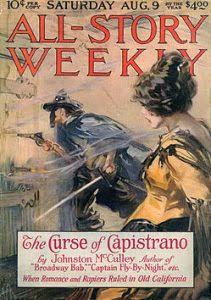
“The Curse of Capistrano” was conceived as a stand-alone story, and Zorro’s identity was revealed at the conclusion. But Zorro received a new lease on life through Hollywood. Actress Mary Pickford believed the character of Zorro was perfect for her dashing new husband Douglas Fairbanks, but Fairbanks wasn’t a lover of books. On a long train journey, she promised him card games if only he would read the pulp story. Pickford, Fairbanks (Senior), and Charlie Chaplin, along with director D. W. Griffith had founded United Artists Studios in February 1919, and The Mark of Zorro became the fourth release from the young studio. Fairbanks’ “dashing and athletic” persona was tailor made for the character of Zorro, and the all-black costume with mask and cape became the hallmark of the character. The silent film’s November 27, 1920 debut marked a critical and commercial success and cemented the new studio’s financial future.
Following the popularity of that initial film adaptation, McCulley continued to write stories featuring Zorro through the 1950s. The masked vigilante swash buckled his way through over forty feature films in a variety of languages, including Spanish, Turkish, Italian, French, and Hindi, as well as more than a dozen television series. The most famous of the television adaptations is Walt Disney Studio’s 1957 Zorro, starring Guy Williams as Diego/Zorro. The Disney version ran for seventy-eight episodes over two seasons, plus four specials broadcast on Disney’s anthology show Disneyland.
1998’s The Mark of Zorro, starring Antonio Banderas and Catherine Zeta-Jones, brought the legend of Zorro to my generation. Anthony Hopkins plays an aging Diego de la Vega who escapes prison to avenge his murdered wife. Antonio Banderas plays Alejandro Murrieta, fictional brother to, yes, that Joaquin Murrieta, a former outlaw who becomes Diego’s protégé. With Diego’s guidance and training, Murrieta continues the legacy of Zorro while successfully courting Elena de la Vega, Diego’s long-lost daughter. None of us who experienced the film will forget that sexy paso doble between Alejandro and Elena at the landowners’ ball.
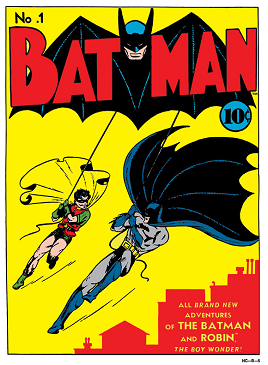
Zorro leaves his trademark “Z” wherever he goes and has earned his place in the pantheon of great heroes. The list of Zorro-inspired characters ranges from Dreamworks’ “Puss in Boots” to Final Fantasy XIV’s “Red Mage” job, but two iconic superheroes were inspired by Zorro’s dual identity and swashbuckling heroism. Jerry Siegel credits both Sir Percy (from The Scarlet Pimpernel) and Don Diego de la Vega as major influences on mild-mannered reporter Clark Kent, who lives a double life as Superman. Bob Kane referenced Zorro as the blueprint for the character of Bruce Wayne/Batman, who made his first comic book appearance in 1939. Hedonistic billionaire playboy Bruce Wayne hides his double life as the masked vigilante Batman behind the screen of a carefree dilettante. The Batcave below Wayne Manor mirrors the cellar in which Zorro hides his secrets. And Zorro’s 19th century swordsmanship became Batman’s martial arts inspired combat style—neither relied on superhuman abilities or strength. With entertainment news sources reporting at least six current Zorro projects in production or development, including an Amazon Prime series; a Tarantino-led Django/Zorro crossover; and Lady Zorro, to be directed by Roberto Rodriguez, it’s clear the legend lives on. ¡Viva el Zorro!