
An Interview with our New Assistant Conductor Kyle Dickson
By Julia Lyon
This fall, we welcome Kyle Dickson as the new assistant conductor of the Utah Symphony. We asked him about his musical influences and what he’s looking forward to in the season ahead.
You’ve conducted orchestras across the United States and around the world. What appealed to you about becoming assistant conductor of the Utah Symphony?
Utah Symphony | Utah Opera has a tremendous reputation for music making at the highest level. For any conductor, the opportunity to work with this orchestra, alongside dynamic guest artists and across such vibrant repertoire, is incredibly exciting.
Utah, itself, is a region rich with history, culture, and a strong sense of identity. There’s something very exciting about making music in a place with that kind of cultural energy and contributing to what the orchestra means to this audience. I’m looking forward to becoming part of that community!
Tell us about your journey to the podium. Was it a specific concert, musician, or moment that inspired you?
There were really two pivotal moments. The first came very early: watching Thomas Wilkins conduct the Detroit Symphony Orchestra on elementary school field trips and, from a young age, seeing myself reflected on that stage. The second moment was as a teenager, at Sphinx Institute of Music, where I studied piano, violin, and music theory through a tuition-free program. Regularly hearing ensembles like the Sphinx and Harlem String Quartets inspired my love for the violin and ultimately led me to become a violinist, teacher, and chamber musician.
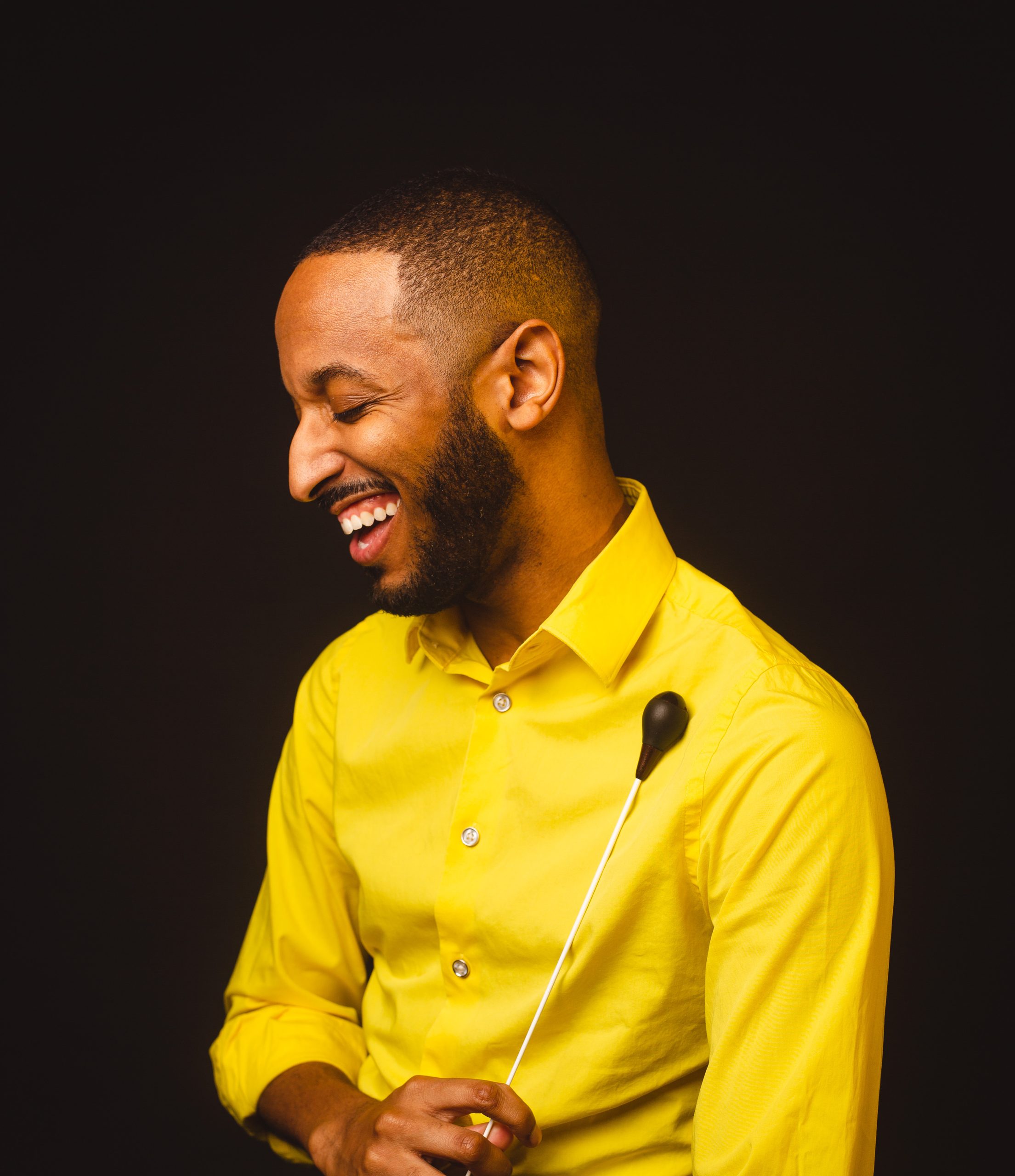
A medical diagnosis threatened my ability to continue playing around the same time a mentor and prominent conductor, Victor Yampolsky, saw me coaching a youth orchestra and encouraged me to pursue conducting. I went on to study conducting with him at Northwestern University while serving as Assistant Conductor of the Chicago Sinfonietta as Freeman Fellow under my mentor Mei-Ann Chen, who I’d played for as a violinist in the same orchestra. I later became a Salonen Conducting Fellow with the San Francisco Symphony. What initially felt like an unexpected turn ultimately became a way to bring together everything I loved about performing, teaching, and sharing music with others.
You’re an accomplished violinist as well as a conductor. How does your experience as a musician influence your conducting style?
I really found my musical voice through the string quartet repertoire, first as a student and later as a professional violinist. Chamber music taught me how much can be communicated through gesture and listening. Leading a string section as a principal taught me many of those same skills on a different scale. I was fortunate to learn that language from teachers who were incredibly perceptive orchestral musicians long before I ever pursued conducting.
I’ve spent a lot of time on the other side of the baton, so to a certain extent I understand what players are being asked to do. I try to make sure that what I do on the podium helps them do it.
You’ve been committed to music education and inclusivity throughout your career. How do you hope to impact young people in Utah?
We all remember the concerts that first made us fall in love with music and the teachers who inspired us and continued to reignite that passion throughout our lives. As a teacher, I’ve always hoped to be that for the next generation.
I want young people across Utah to know that the concert hall is a place for them and that classical music can be a source of expression and representation for them, too. It’s an honor and a privilege to be part of a young person’s first experience with a piece of music, and I take it seriously. I hope to be a bridge to the concert hall in the same way others were for me.
What advice would you give a young person aspiring to become a conductor one day?
The best conductors are incredible musicians first and foremost, so focus on constantly sharpening your musicianship. Master your own instrument, but also learn as much as you can about other instruments, scores, music history, and how great performances come together. The stronger and more curious you are as a musician, the more naturally the path to conducting will follow.
Go to as many rehearsals as you can! And play as much chamber music with other people as possible. Conducting is ultimately about listening, communicating, and making music collaboratively—and you don’t need an orchestra in front of you to start developing those skills.
Audiences will get to see you at work during a variety of pops and family concerts this season. What are you looking forward to in your inaugural season with the Utah Symphony?
Connecting with families in Salt Lake City! There’s lots of fun programs lined up and I can’t wait to get to interact with audiences through a very interesting variety of concerts. I’m particularly looking forward to getting to know concertgoers during the pre-concert chats!
Meet our new assistant conductor from the audience! See Kyle Dickson take the podium with the Utah Symphony throughout the 2026–27 season.