
Romeo & Juliet Online Course by Ross HagenPart 1- Charles Gounod Biography
by Ross Hagen Charles Gounod was born in Paris in 1818 into an artistic family; his father was a painter and engraver and his mother was a pianist and visual artist. Following his father’s death in 1823, Gounod’s mother supported the family by starting a piano teaching studio. As a student, he studied with a rather eclectic range of teachers, and in 1839 ultimately won the Prix de Rome, a prestigious scholarship that allowed the winner to spend several years in Rome. Although he was apparently unimpressed by the current operatic offerings in the city, he much admired the city’s cultural legacy and its musical heritage, particularly the sacred works of Palestrina. When he returned to Paris in 1843, he took up a position as maître de chapelle at the Séminaire des Missions Etrangères, writing sacred music until 1847, when he left for a short-lived attempt at seminary studies.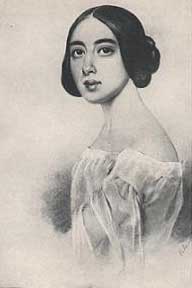
Pauline Viardot
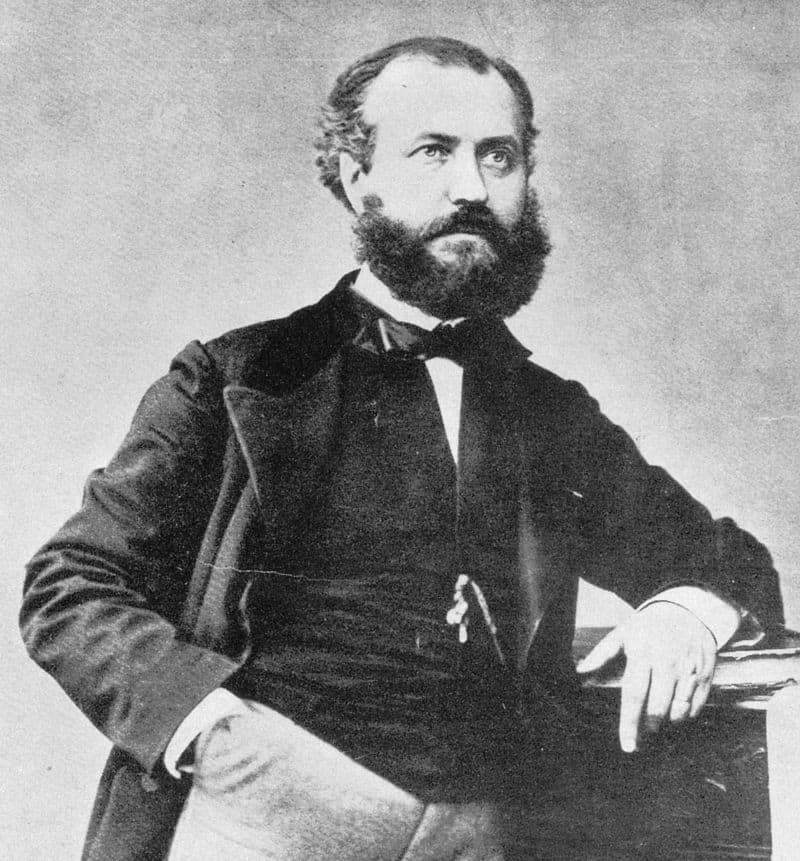
Charles Gounod in 1859, the year of the premiere of Faust
Gounod’s first major operatic hit, Faust (1859), at first looked to be another failure as its more progressive elements divided critics and audiences. Although Gounod’s fellow composers and critics often appreciated the opera’s bold strokes, stylistic heterogeneity, and Gounod’s attention to prosodic concerns (likely drawn from his experience writing and performing art song), other factions of the press were fairly hostile. Following the closing of the opera, Gounod reset the spoken dialogue as recitative with the idea to seek performances abroad, a plan that came to fruition when the publisher Antoine de Chaudens bought the rights and took the opera on tour through Germany, Italy, Belgium, and England. When it returned to Paris in 1862, it was chosen to open the new hall of the Théâtre-Lyrique by the director Léon Carvalho, who had overseen the opera’s development during his first term as director. This time it was a massive hit. Its success encouraged Gounod to write five more operas over the 1860s: Philémon et Baucis (1860), La colombe(1860), La reine de Saba (1862), Mireille (1864) and Roméo et Juliette (1867). The success of Faust and particularly Roméo et Juliette in 1867 also increased demand for his steady output of devotional works and mélodies, making this time period essentially the apex of his career. Oddly enough, the operas written between Faust and Roméo et Juliette did not do well, but this series of failures apparently didn’t affect Gounod’s reputation that much.
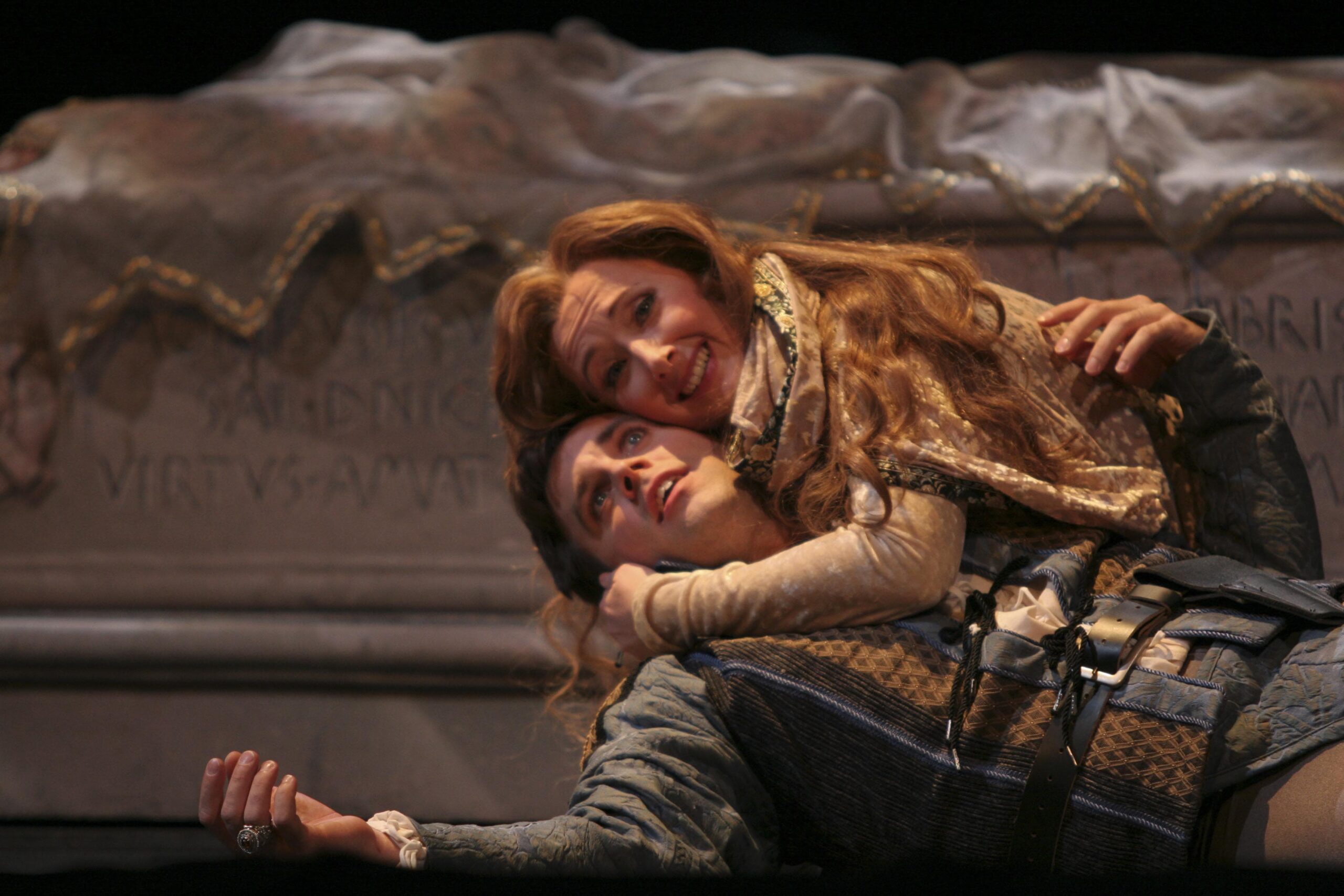
Utah Opera Company production of Romeo & Juliet, October 2005, Kent Miles
Giroud, Vincent. French Opera: A Short History. New Haven: Yale University Press, 2010. Huebner, Steven. “Gounod, Charles-Francois.” Grove Music Online (2001).