
The Pearl Fishers – Performance Issues & Criticism
by Ross Hagen 20th/21st century classical music audiences and critics place significant importance on the composer’s intentions and generally want to hear a work as the composer wanted it, but The Pearl Fishers exposes the limits of this endeavor. Opera in general is often a little problematic in this regard because scores were commonly altered and augmented by the composers or others in order to fix parts that flopped, pander to local tastes, and appease censors. Official vocal scores were usually produced in advance of the opening for promotional purposes, so they cannot be trusted to reflect any last-minute changes. Even under these circumstances, scholars can hopefully locate an autograph score or series of scores in the composer’s hand that can be taken to represent a finished and definitive version. The Pearl Fishers presents a dilemma because there is no extant full score in Bizet’s hand, and some passages were only available in vocal score editions until very recently. The first run of late 19th-century revivals also changed the opera’s ending significantly, scrapping the original ending in which Zurga allows Leïla and Nadir to escape and replacing it with ones in which Zurga meets his end in various ways as punishment for defying the villagers. New music was interpolated into these scenes and later issued in subsequent editions used for performances through the 20th century. It wasn’t until the 1970s that the opera was fully restored following the discovery of a conducting score in which Bizet had made indications for orchestrations.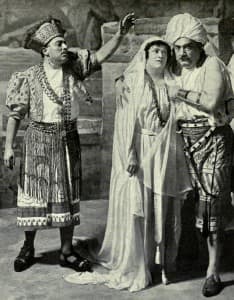
Caruso in The Pearl Fishers 1916

Final scene of Act 1 of The Pearl Fishers by Bizet -Gallica
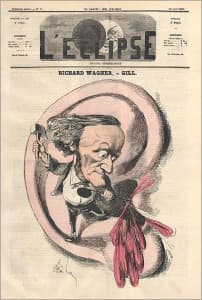
Gill Wagner
However, it is worth noting that the accusations of Wagnerian influence in The Pearl Fishers and other works often relied on very thin evidence, and critics often had little to say in terms of specific details. For example, although The Pearl Fishers uses the melody of the Nadir-Zurga duet eight times over the course of the opera, the critics seemed not to connect this with Wagner’s similar use of leitmotif in his operas. (Lacombe 77) Additionally, Parisian audiences and critics of the time had little exposure to Wagner’s actual music, and instead referred to Wagner’s writings or simply parroted the things that other critics had written about his music. Wagner then became a sort of effigy for any music deemed to be overly complex and dissonant in its harmonies, lacking proper emphasis on melody, and/or simply too enamored of its own profundity. An actual connection to Wagner’s music was not required, and indeed the critic Jules Ruelle complained that invoking Wagner was simply a cynical way for writers on music to lend authority to their criticism. (77)
The Pearl Fishers’ critical reception in more recent years has likewise been rather uneven, with some reviewers referring to it as a “one duet wonder” in reference to the popular tenor duet “Au fond du temple saint.” As noted, The Pearl Fishers wasn’t restaged until after Bizet’s death and it wasn’t performed very often until the latter half of the 20th century. Even then the renewed interest can be traced at least in part to the popular 1951 recording of the duet by Jussi Bjorling and Robert Merrill. The popularity of this duet creates a bit of an awkward situation because it appears in the first act, so for many listeners the opera may seem to peak too early. However, the opening motif reappears several times over the opera and some productions have apparently reprised the duet as curtain call music or as an additional finale.
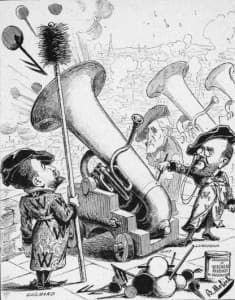
Le nouveau siège de Paris en 1891 by Moloch